Detach From Results

A lot of students tie their entire self-worth to outcomes.
One test. One result. One bad lesson.
And suddenly they think:
“I’m failing”
“I’m not smart enough”
“Maybe I’m just not capable”
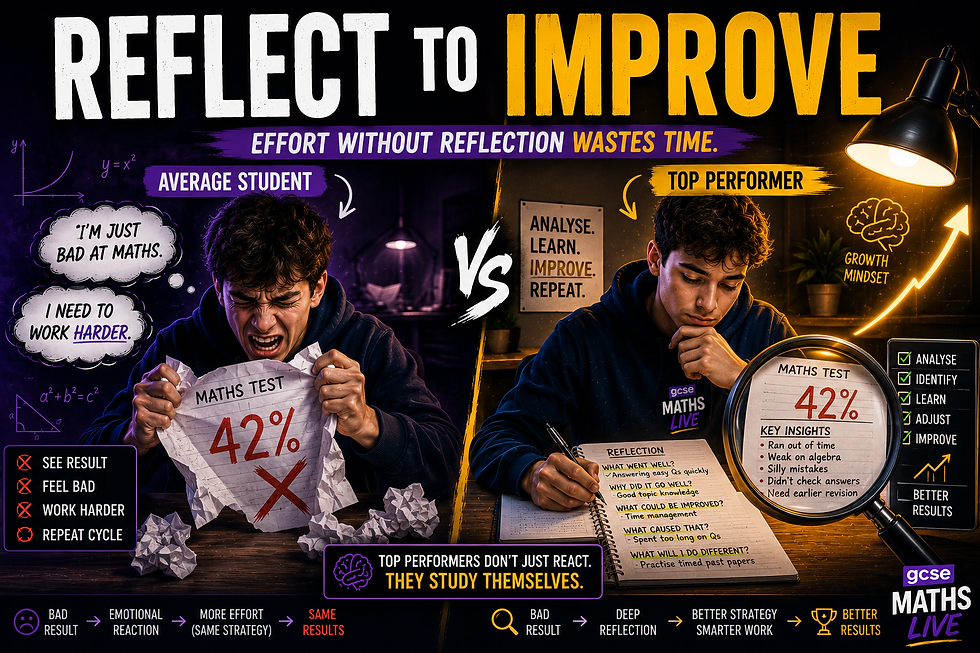
But top performers think differently.
They care deeply about results…without emotionally depending on them.
They understand:
results are feedback,
not identity.
One bad performance does not define you.
And one good performance does not complete you either.
Main Problems
1. Students emotionally attach themselves to every result
A lot of students feel:
confident when results are good
worthless when results are bad
This creates emotional instability.
Your confidence rises and falls constantly depending on outcomes.
2. Fear of failure stops students performing well
When students become obsessed with results:
pressure rises
panic rises
overthinking increases
Ironically, needing the result too badly often hurts performance.
3. Students confuse outcomes with identity
A low mark means:
“I performed poorly today.”
It does NOT mean:
“I am stupid.”
“I am a failure.”
“I’ll never improve.”
Top performers separate:
performance
from
self-worth.
Action 1: Focus On The Process You Control
You cannot fully control:
the paper
the exact questions
other students
every outcome
But you CAN control:
preparation
effort
consistency
revision quality
attitude
recovery after mistakes
Top performers focus most of their energy on:
controllable actions.
That creates calmer performance.
Action 2: Judge Yourself By Effort And Standards
After a test or challenge, ask:
Did I prepare properly?
Did I stay disciplined?
Did I give genuine effort?
Did I learn from mistakes?
Those questions matter more long term than:
one single score.
Results change constantly.
Character and habits create long-term success.
Action 3: Learn To Recover Quickly
Top performers are not calm because everything goes perfectly.
They are calm because they recover quickly when things don’t.
A difficult question.A bad mock result.A mistake in revision.
None of these need to emotionally destroy you.
Pause.Reflect.Adjust.Continue.
The faster you recover emotionally:
the stronger you become mentally.
Action 4: Stop Needing Immediate Proof
A lot of students panic because:
they revised
they worked hard
and they expected instant evidence
But progress is often invisible before it becomes visible.
You do not need constant proof to continue improving.
Trust the process long enough for results to catch up.
Action 5: Build Internal Confidence
External confidence depends on:
grades
praise
validation
results
Internal confidence comes from knowing:
“No matter what happens, I’ll keep improving.”
That kind of confidence is much stronger because it survives setbacks.
Top performers care about winning.
But they do not emotionally collapse when things go wrong.
Because they understand:one result never decides your future 😊
If you'd like more help with your child's GCSE Maths, book in a free live lesson here:
Want to experience my full platform free for 7 days? Try here:


Comments